A Quiet Hour Beside the Working Harbour
A quiet hour beside the working harbour can reveal its rhythms. Choose a suitable public viewpoint and notice how routes, edges, and waiting places are used.
The common mistake during a quiet hour beside a working harbour is settling wherever there is space, without checking whether the spot is meant for visitors. The cost is a distracted visit: you may block someone’s route or spend the hour watching activity too closely to notice how the harbour fits together. A good public viewpoint lets you observe the place without making workers or passersby the subject.
Think of observation as attention, not access. A harbour can look still while crews prepare for a departure or wait for conditions to change. Choose a spot identified for public use, follow local directions, and give other visitors room to pass. Boundaries differ from one harbour to another, so rely on posted signs and directions from harbour staff rather than the apparent openness of a paved area.
Choose a viewpoint
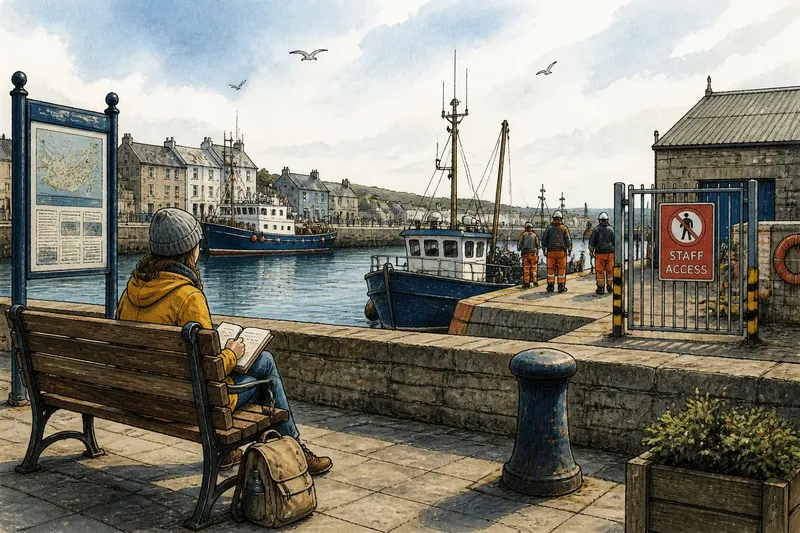
A fixed viewpoint—a public bench, promenade, or marked overlook—suits someone who wants to notice changes in one scene. Choose a seat with a view of boats and public routes, while keeping your attention on the layout rather than people in restricted areas.
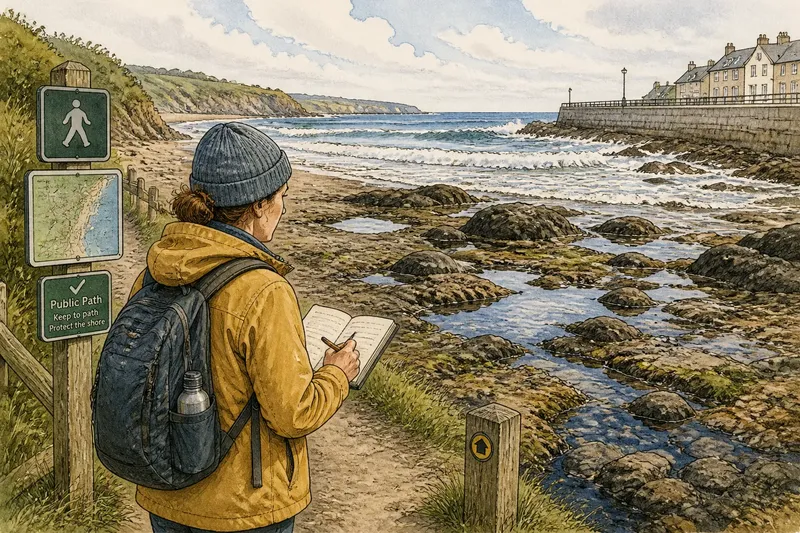
A short circuit along a signed visitor path offers a different view. It might pass a quay-side promenade, a public lane, and a sheltered seating area. This helps you compare how paths and edges meet. Keep to the route provided for visitors; if it does not offer a suitable view, do not improvise a shortcut.
A sheltered waiting place, such as a public seat near a harbour entrance or visitor-facing waterfront, makes it easier to notice pauses and passing movement. Choose one set apart from entrances, loading points, and places where crews gather.
Match the spot to what you want to observe. A bench helps you follow one scene; a public path lets you compare vantage points; a sheltered seat makes pauses easier to notice. If no public place offers a comfortable view, choose another part of the waterfront or return another day.
Read edges and routes
A low wall, gate, painted line, bollard, or posted notice can indicate how a space is used. The surface alone may not tell you whether visitors are welcome. From a public path, notice where people walk, where they turn toward marked entrances, and which areas remain clear for equipment or vehicles.
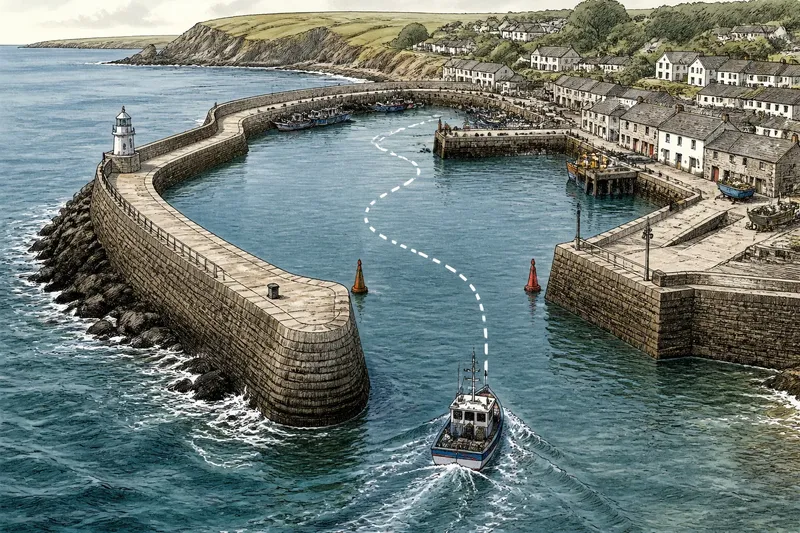
Routes reveal how movement is organized. You might see a path leading toward a landing, a vehicle lane serving a work area, or a clear strip beside a building. Observe from a public position rather than following workers or standing in a doorway or at the head of a ramp.
Imagine you arrive at a promenade and see a broad paved area beside a quay. A sign marks one section for staff access, and a public bench sits away from the entrance. You settle on the bench, keep the entrance clear, and note how pedestrians use the promenade while a crew passes through the marked access point. The result is a view of how public and work routes meet, without making anyone stop or change course.
Notice waiting places
Waiting is part of a harbour’s ordinary rhythm. Visitors may pause by a public information board or sit under a shelter, while workers need open space near a vessel or access point. A quiet moment does not change the purpose of an operational area.
Look for signs that a place is intended for public stopping: a bench, shelter, information board, or marked visitor path. A convenient-looking corner is not necessarily a suitable place to linger. Do not treat a worker’s pause as an invitation to approach.
A small notebook can help you keep neutral observations. Write down the viewpoint, the path you took, and details such as “visitors remain on the promenade” or “people pass through the marked entrance.” Leave out private conversations, identifying details, and guesses about why someone is waiting. A phone works too, but put it away when you need to watch your footing or attend to signs.
Keep an hour unhurried
Begin by noticing the broad arrangement: where water meets built edges, where public paths run, and where visitors can pause without blocking movement. Then watch one public route for a while. You may notice steady foot traffic or a path used mainly when a vessel is present. Treat these as observations, not predictions about the harbour’s schedule.
If a signed path offers another public vantage point, move there and compare the views. A bench may show more of the waterfront; a path may reveal how a route bends around a building; a shelter may make pauses easier to see. Leave a view alone if reaching it would mean crossing a barrier, entering a staff area, or standing in the way of vehicles.
Wear shoes suited to the public path, keep children close near the water, and leave if conditions or local directions make the spot unsuitable. These simple precautions help you stay attentive without approaching equipment or vessels.
- If a sign marks a visitor path, follow it; if it directs visitors elsewhere, take the indicated route or choose another public viewpoint.
- If a bench or shelter is clearly set aside for visitors, use it; if people need the space to pass or wait for work, move to another public seating area.
- If a gate or painted line marks staff access, observe from the public side; if the boundary is unclear, ask harbour staff or choose a clearly marked visitor area.
- If a route carries vehicles or equipment, keep it open; if your position narrows the passage, move to a place that does not interrupt movement.
- If a noticeboard or sign gives visitor directions, use those instructions; if signs conflict or the area’s status is uncertain, ask staff rather than guessing.
- If your notes describe paths, edges, or visible movement, keep them; if they include private conversation or identifying details, leave those details out.
Questions before settling?
Where can I watch harbour activity?
Choose a signed public promenade, visitor overlook, or public seating area with a view of the harbour. Keep entrances, ramps, and vehicle routes clear.
How long should I stay in one place?
Stay while the spot remains comfortable and appropriate. Move if you begin to obstruct others or the area becomes busy.
What should I write down?
Record visible features such as public paths, waiting areas, and the direction people move through an open space. Leave out personal details and assumptions about people’s intentions.
Can I photograph workers or boats?
Follow posted rules and respect people’s privacy; do not photograph into restricted areas. If a person would become the main subject, ask permission when appropriate or frame the public layout instead.
Leave room for work
A quiet hour beside a working harbour is not a chance to get closer to every activity. It is a chance to see how public edges, routes, and waiting places work together while people carry on with their tasks. The most useful observation often comes from choosing a suitable public position and letting the harbour’s layout guide your attention.
Before leaving, take your belongings and check that nothing is left where it could obstruct a path. If you want to return, note which public viewpoint gave you the clearest view without drawing attention to individuals. That small choice can make your next quiet hour more observant and more considerate.